
Vanesa Aibar twists the boundaries of flamenco and metal—literally. With her sinewy movements and fierce creativity, she creates a world that is both mesmerizing and unsettling. Next week, during the intermezzo of the Flamenco Biënnale Nederland, she’ll perform her striking show La Reina del Metal, a daring exploration of art and flamenco.
Vanesa Aibar is a curious creature in the universe of flamenco dance. She churns my insides when she twists her lean body into strange angular shapes, while she remains captivatingly flamenca – proud and elegant in her stance. Today- Día Internacional del Flamenco (International Flamenco Day) – is the perfect occasion for a portrait of this innovating flamenco artist.
Next week, 19-22 November, Vanesa Aibar performs her show ‘La Reina del Metal’ during the intermezzo of the Flamenco Biënnale Nederland. Flamenco Artworks © will be there to report back. “Exciting, feisty and playful” the Dutch media called her performance ‘La Reina del Metal’ at the Dutch Flamenco Biennial in 2023. Now she returns for the intermezzo of the festival, with this striking dialogue between flamenco and metal.
Aibar already was one of the surprises at the Dutch Flamenco Biënnale back in 2019 where she met percussionist Enric Monfort, with whom she – at request of the festival- created this show. It is typical of the Dutch Flamenco Biennial to programme the most avant-garde artists of the current day flamenco scene. As artists have always been recognized in other countries than their own first, it makes me proud to think that here in The Netherlands we are part of a culture that facilitates these international breakthroughs for flamenco artists.


Twisting Flamenco Traditions: When Metal meets Movement
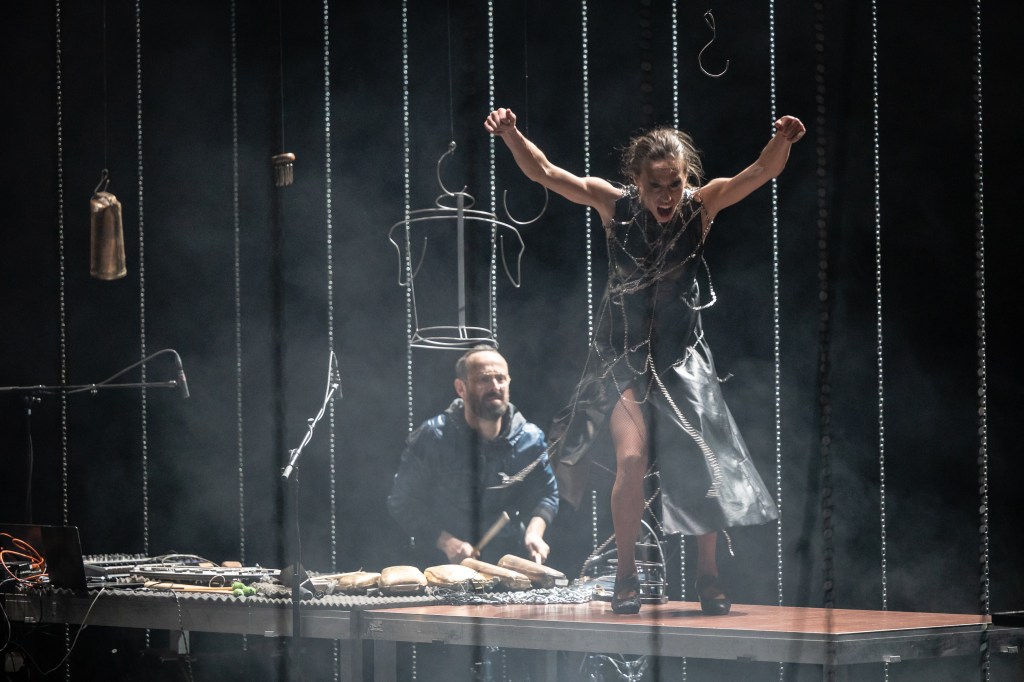
Vanesa Aibar’s performance is fascinating and a little unsettling, blending raw movement and flamenco compás with artistic exploration. Aibar’s collaboration with Enric Monfort in ‘La Reina del Metal’ creates a unique focus on percussive rhythm and movement. The spatial sound system of the Dutch collective 4DSOUND immerses the audience in a flamenco soundscape. Her footwork takes center stage, amplified by the metallic sounds around her, while her dress—chains and all—becomes part of the performance. At one point, the percussionist even plays her shoes, producing sounds I’d never expect from flamenco footwear. The absence of traditional singing and guitar in this piece shifts focus to percussion, an element in flamenco that is rarely highlighted like this — an awesome artistic move that shows me Aibar’s conceptual way of exploring flamenco and produces real innovation.
F*ck femininity, Flamenco
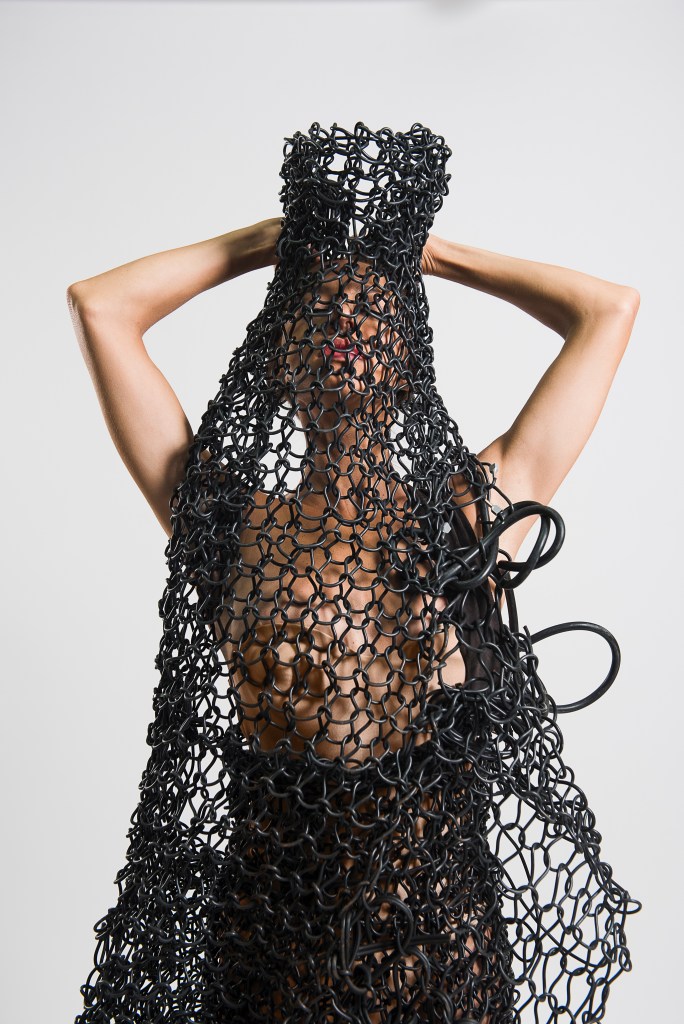
This conceptual exploration of rhythm and movement builds on Aibar’s earlier works, such as her serpent-inspired ‘Sierpe’ (2019) which premiered at the Flamenco Biënnale Nederland where she first began experimenting with metal in her costumes. Vanesa Aibar endlessly tickled my artist’s heart when she evoked a serpent-woman and showed up in a bata de cola (large tailed dress) made up entirely out of iron shackles. She combined Spanish folklore with an exploration about femininity, inspired by mythology, using her body as well as her artistically tailored dress and even stones as castanets, to create something that felt both mesmerizing and strong.
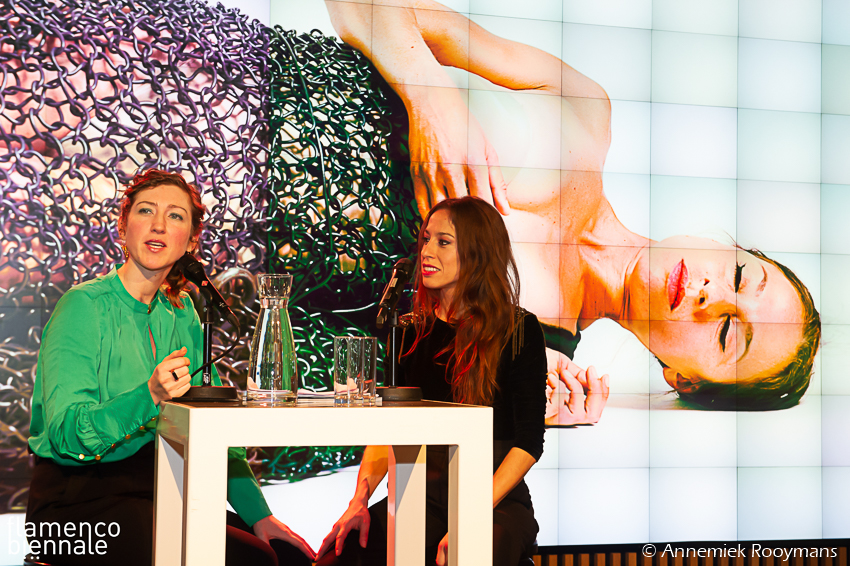
Vanesa Aibar made all of this her own to establish an analogy between the myth of the serpent and the definition of the flamenco dancer, a construct originating in Romanticism that served as an abundant source of imagination – carnal, sexual, sinful, swaying and animalistic, serpentine, ardorous – and created an angular, hypnotic and liminal piece. Aibar’s process isn’t just about performing. In an interview she explains how she steps into feminine archetypes present in flamenco—even ones she doesn’t personally connect with—to see what they can bring to her work.
Breaking Molds, Building Art
How can we define Vanesa Aibar’s work? Artful in concept, musicality and visuals. She transcends flamenco tradition, staying rooted in it. It’s when I stop trying to figure out which palo (style) she is dancing and let myself get drawn into her world of movement, sound, and visuals that I realize Aibar’s dancing is more than flamenco—it’s art.
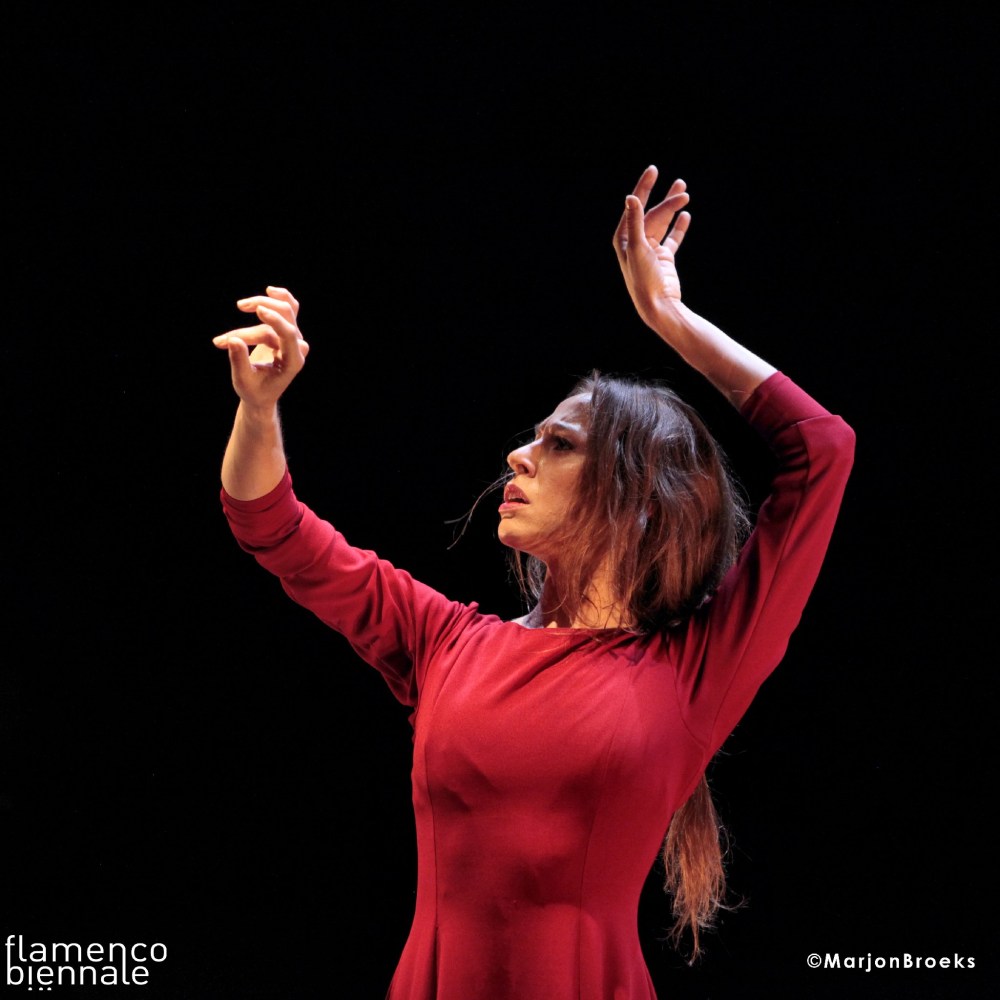
Vanesa Aibar (Jaén, 1983), schooled in Danza Española and Flamenco at the conservatory in Granada and Centro Andaluz de Danza in Seville, has been creating shows since 2012 and awarded with several prizes. She is a dancer and choreographer who is always experimenting. Not only do Vanesa Aibar’s movements challenge the traditional forms of flamenco, breaking molds and stretching its limits. Aibar doesn’t just make strange movements just to be strange. She also brings a level of intellectual and artistic depth that stands out.
Watching her, I feel both inspired and envious. She’s not just a dancer; she’s someone who fully researches and develops her work, both intellectually and physically. That’s something I admire, and don’t always know how to do myself. We have talked about flamenco and art history, and I was struck by how she balances conceptual thinking with artistic creativity. While her strong and stringy appearance adds to the raw, aggressive aesthetic she often portrays, and she challenges clichés of the ‘elegant’ female flamenco dancer, there is a harshness to Aibar’s work though, and to her body, that sometimes makes me uneasy and looks unsustainable. As impressive her toughness might be, she also makes me wonder where the line is between pushing boundaries and pushing too hard.
However, most importantly, Aibar navigates this intricate art form called flamenco with a openness and creativity that feels freeing. Her extensive research ensures that her work is grounded in meaning while pushing boundaries. Even flamenco icons like Rocío Molina, herself a celebrated innovator, have invited Aibar to residencies, recognizing her originality and depth. Vanesa Aibar’s work, shows us that flamenco is not static—it can evolve, merge with new ideas, and still retain its core.
Vanesa Aibar; La Reina del Metal, a queen of flamenco, she definitely is.
‘La Reina del Metal’ is showing 19-22 November at Flamenco Biënnale Nederland Look at the programme here Sign up for Flamenco Artworks © now! And receive more Flamenco news & history right there in your e-mail
Discover more from FLAMENCO ARTWORKS © |||///|||///||| |||///|||///||| HANNET ENGEL
Subscribe to get the latest posts sent to your email.
 FLAMENCO ARTWORKS © |||///|||///||| |||///|||///||| HANNET ENGEL
One Comment Add yours